

Spring has an excellent publicist. Ask almost anyone when to buy a home and the answer arrives with the tulips: spring, obviously, when the sun is out, the lawns are green and everybody else has had the same idea.
That last part is the catch. A handful of things line up in winter that simply don't in April, and the buyers who notice tend to be glad they did. Here are six, one of which comes with a deadline.
1. Fewer People, More Attention
Even in a busy year, a January weekend is not an April weekend. Fewer appointments on the calendar means more time with the sales team, more room to ask the questions you'd normally save for later, and the chance to compare two floor plans without feeling hurried along.
The same goes for the people around the purchase. Mortgage brokers and lawyers tend to have a little more breathing room in winter, which helps when the paperwork starts to pile up. Nobody is squeezing your questions between two other clients.
2. Builders Like a Strong Finish to the Year
Most builders, like most businesses, have year-end goals, and the last quarter is when many of them want to finish well. Industry commentators regularly point to December and the year-end stretch as a time when buyers find more flexibility, which is another way of saying conversations tend to be easier.
To be clear, what's available varies by home and by community, and nobody can promise a particular offer. It costs nothing to ask, though. Your sales representative will tell you what applies to the home you're considering.
3. The Clock on the HST Relief
This is the one with a deadline. Ontario's expanded HST relief on new homes covers agreements of purchase and sale signed between April 1, 2026 and March 31, 2027, with up to $130,000 back for eligible buyers. It isn't only for first-timers: if the home will be your primary residence, you may qualify. What counts is the date you sign, not the date you close, and the builder typically credits the rebate at closing. How much you receive depends on the price of the home, so it's worth a conversation with your sales representative and your lawyer. The TRREB overview and the CRA's builder-purchase page are good places to read more.
Five months sounds like plenty. It also happens to end right as the spring market warms up, which is when everyone else remembers to start looking. Deciding in January leaves room to breathe. Deciding on March 30th does not.
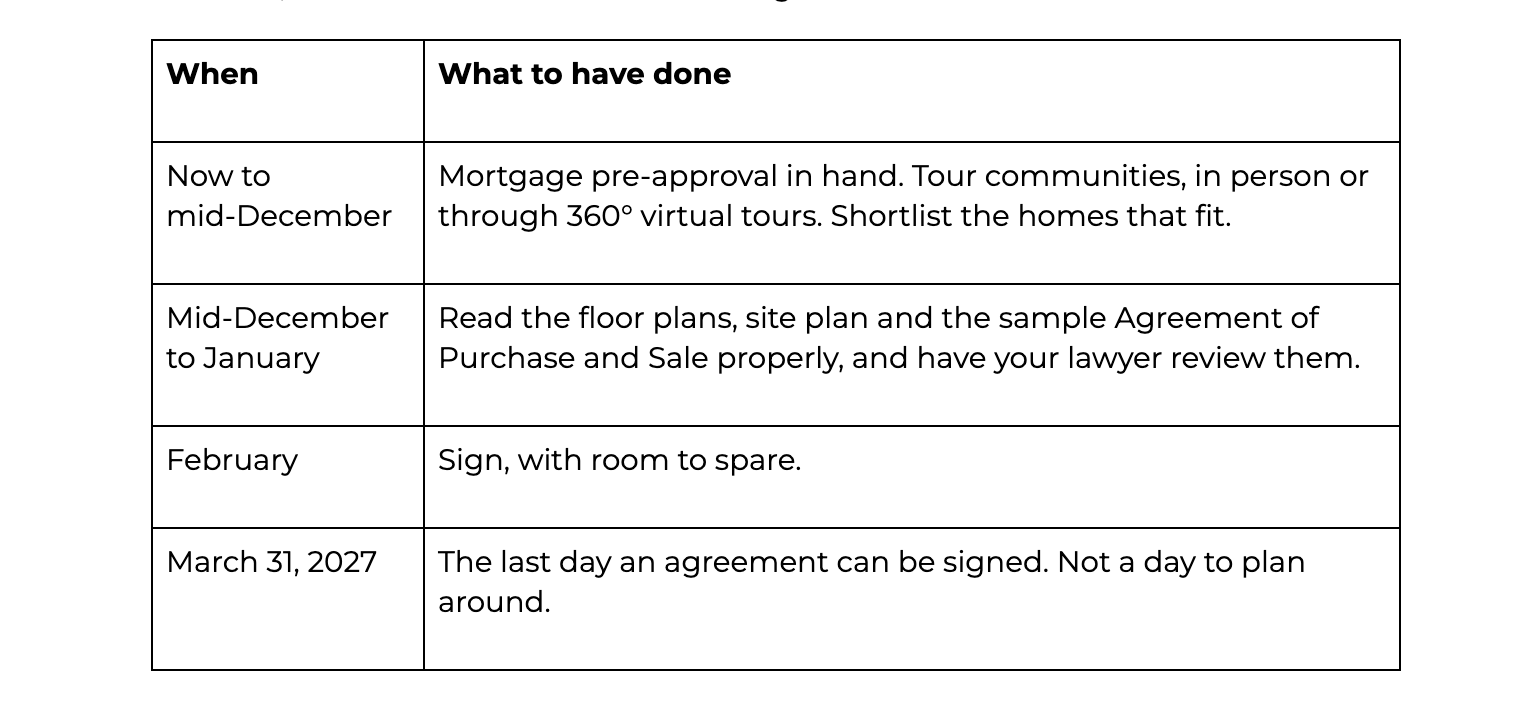
As of the end of October, about five months remain. Working backwards from the deadline, a sensible winter looks something like this:
4. Winter Is an Honest Test
Any home looks its best on a bright July afternoon. A February one is more revealing: wet boots, a heavy coat, groceries in both hands, snow on the driveway.
It's a good season to study a floor plan against that routine. At Rosabella, for instance, foyers, mudrooms, and laundry rooms are finished in 12x24 porcelain tile, the main entrance door stands 8 feet tall, and there's parking for three cars. The 360° walkthroughs let you revisit a layout at 9 p.m. in your pajamas, which no in-person appointment can match.
5. Your Timeline Stays Yours
Deciding in winter gives you time to plan the move on your own terms. Depending on the home, that might mean settling in once the weather turns, or lining up a move around the school year. Occupancy timelines differ from one home to the next, so it's one of the first things to ask about.
And if waiting isn't your style, InDesign's Move-In Now page collects move-in-ready homes with quick closings.
A Simple Winter Game Plan
November: Get pre-approved. Browse communities and take a few virtual tours.
December: Narrow it to a short list and ask every question you have.
January: Have your lawyer read the agreement. Make the decision.
February: Sign with room to spare. March 31 is the last day, not the target.
Whatever the Season, a Home Should Feel Finished
At InDesign Homes, the idea is simple: a new home shouldn't feel like a starting point for a long list of upgrades. At Rosabella, for example, features many buyers expect to pay extra for come included: 10-foot ceilings on the main floor, smart home automation, a full appliance package and 200 amp electrical service, all backed by the Tarion Warranty Program.


